Back-to-back treatments, unanswered patient messages, a front desk on the verge of burnout—if that sounds like your daily reality, it’s not your staff failing. It’s your system.
Outdated tools drain revenue and bury your team in manual work. A modern CRM, such as a HIPAA-compliant CRM for aesthetic practices, replaces that chaos with automation, organization, and a clear path to ROI.
Here are a few signs your current setup is due for an upgrade.
1. Patients Are Missing Appointments
How often do your scheduled patients become no-shows or show up at the wrong time? Every no-show is wasted revenue and wasted staff time. If it’s happening often, your scheduling system isn’t pulling its weight. With automated reminders and confirmations built into a CRM for aesthetic clinics, patients show up when they should, and your team stops wasting hours chasing confirmations.
2. Your Inbox Is a Mess
It starts with a few patient messages on Instagram. Then some emails. Then a flood of texts and missed calls. Soon enough, your team is completely buried under a pile of messages. Because these touchpoints can’t communicate with each other, your staff has to play detective to try to piece together who said what and when. This can hurt patient satisfaction and may even drive your clients to competitors.
A robust CRM consolidates every patient interaction into a single, searchable timeline. It logs every message, whether it’s a text or social media DM. No more bouncing between apps or searching old threads. Your patients feel heard and your staff gets fewer complaints because every person is looped-in rather than constantly scrambling to figure out who said what and when.
3. Promotions Are a Moving Target
If you can’t track responses or automate follow-ups, your campaigns are leaking revenue. A modern CRM segments patients by treatment history, preferences, and behavior, then delivers campaigns that convert. Real-time data shows what’s working so you can double down, not guess. You can automatically send personalized promotions and reminders to specific groups and monitor their response in real time.
Say your clinic is running a summer skincare campaign. You could schedule automated sequences, analyze engagement, and fine-tune your campaigns without overwhelming your team.
4. You’re Using Spreadsheets to Track Treatments
Spreadsheets break the moment your practice grows. Missed follow-ups, incomplete notes, and treatment errors put your reputation and revenue at risk. A CRM centralizes every patient’s journey, so your team has full visibility. You can see the whole journey in one place, from past procedures to scheduled follow-ups. This kind of organized workflow keeps everyone on the same page.
5. Patient Communication Is Inconsistent
Patients don’t just notice inconsistent communication. They leave because of it. A CRM creates a single source of truth for patient interactions. With plastic surgeon CRM you can enhance patient communication because it stores procedure notes and logs each patient’s treatment history. Your team members will have the right context to answer patient inquiries regardless of when they last contacted the clinic.
It helps your staff keep all responses accurate and aligned with your clinic’s standards. That continuity builds trust, keeps patients returning, and prevents churn.
6. You’re Dealing with Data Overload
Your current system might provide you with raw data, but raw data is useless if you can’t act on it. A CRM turns numbers into strategy with dashboards that track engagement, revenue, and bottlenecks. These insights reveal when to message patients, which campaigns convert, and where operations are slowing growth so every decision is backed by evidence, not guesswork.
For example, you may discover that patients are more likely to confirm their appointments when you send early morning reminders. Alternatively, you might find that patients who didn’t follow through with an appointment are more likely to book a Botox or skin treatment if they’re sent a small promotion three months after their initial consultation.
Such insights create data-driven decisions. Because a CRM helps you see what is and isn’t working, you can better optimize your marketing and operational strategies.
Making the Case for a CRM Upgrade
If you’re constantly playing catch up or chasing scattered info, odds are your current systems are holding you back. Upgrading or integrating new practice management CRM software for aesthetic practices can transform your clinic’s workflow and create a sustainable, long-lasting growth model.
If you want your practice to thrive, you need to pair your high-quality aesthetic service with a high-quality CRM system that can actually do the work you need it to do.
Video
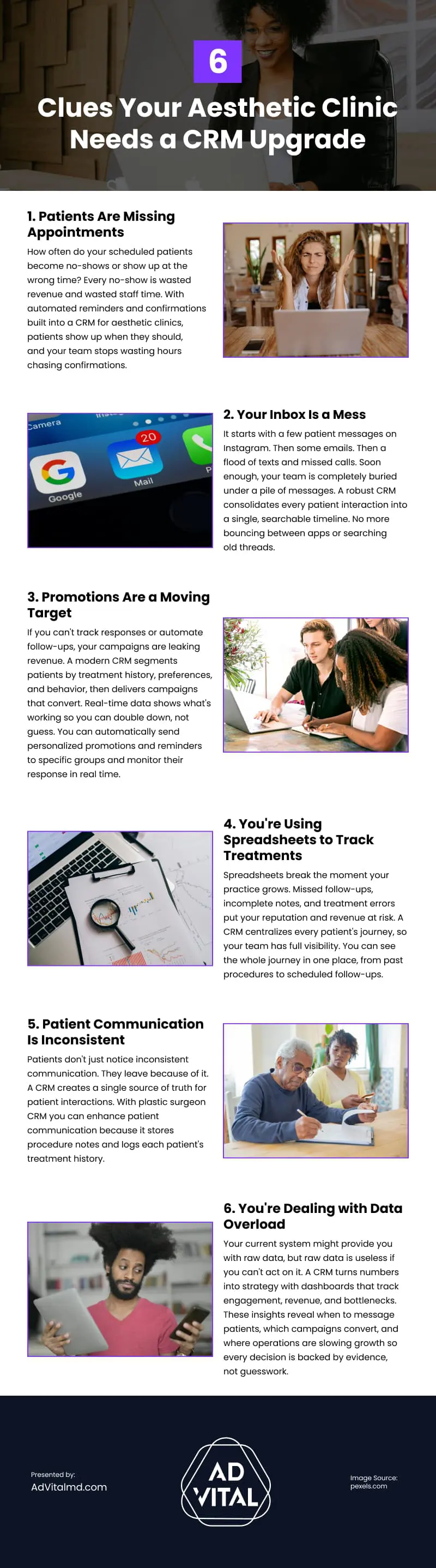
Infographic
If your aesthetic practice is dealing with missed appointments, overflowing inboxes, and burnt-out staff, the problem may be your outdated system, not your team. These outdated tools can cause chaos and lost revenue. Check out this infographic for six signs that your clinic needs a CRM upgrade.